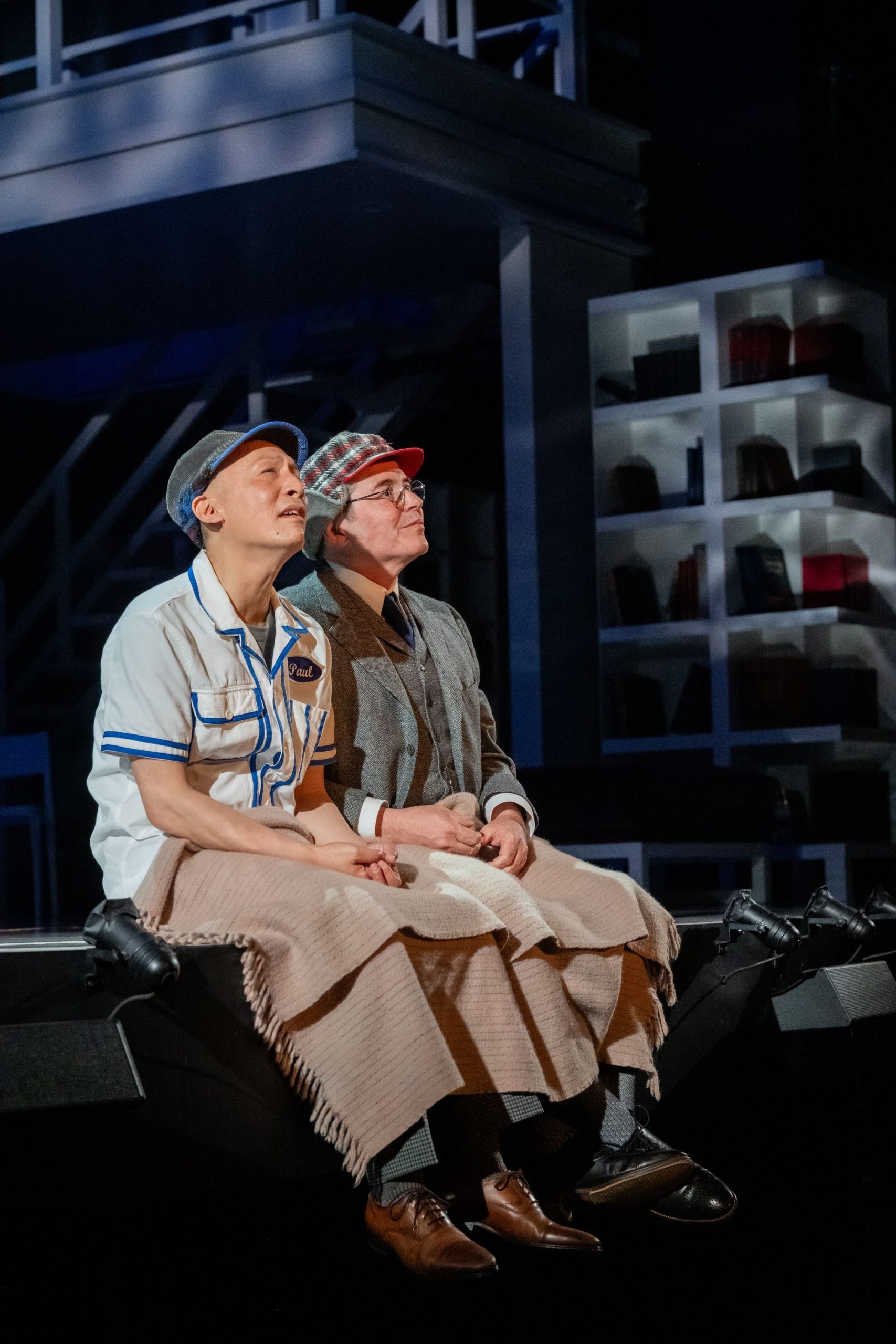
LIGHTS UP ON: John Leguizamo

John Leguizamo

Award-winning actor John Leguizamo stars in La Jolla Playhouse's Page To Stage production of JOHN LEGUIZAMO DIARY OF A MADMAN, running March 4 - 14, 2010 in the Mandell Weiss Theatre; photo by Carol Rosegg.


Full given name: John Alberto Leguizamo
Hometown: Jackson Heights, Queens New York
Worst job: Working stock room of kentucky fried chicken
First Broadway show you saw: Chorus Line
Preparation before a show: nap, boxing, pushups, cursing and praying.
Worst costume: captain vegetable on sesame street
Favorite part of the production process: On set doing as many ‘takes’ as it takes.
Worst onstage mishap: doing a beach scene and the suntan lotion got all over the stage and I ran on and slipped and almost knocked myself out.
Favorite stage role: Puck in Midsummer’s night dream
Favorite movie role: Frank in WHERE GOD LEFT HIS SHOES
Favorite websites: besides the porn ones? I gotta say the New York Times and Craig’s List. Ebay too.
If you weren’t an actor, what career would you have? I’d be a therapist if I could pass chemistry class.
What book are you currently reading? My Own Biography Pimps Ho’s and Playa haters etc. looking for the passages that got everyone so worked up about.
Guilty pleasure T.V. Show: How things are made. I can watch for hours. anything with Aztecs or Mayans on history channel.
If you could live during any other time period, what would it be? I’d like to Live in the Aztec times before the conquest. when chocolate flowed, gold was everywhere and women ran everything.
You were recently on CNN discussing Latino Assimilation, what other issues/causes are you passionate about?
Helping immigrants, underprivileged kids, teens in prison, saving historic buildings, stopping Genetically mutated foods, going green and making this country healthy, anti corporate, protecting our unions, stopping out sourcing, buying American… I got a million cause. Why cause I care.
Is there one thing you’d like your fans to know about you? I’m great listener. if somebody has a great story I’m your best audience. But then I like to try to top it too. Oh well.
How would you spend a million dollars? A million dollars ain’t nothing. Ask me how I would spend 10 million and then we are talking. I’d buy make kick ass super funny and meaningful independent movies.
Favorite thing about San Diego? the people. I really get a kick how laid back everybody is and how mellow. Great diversity makes it hip.

Comments (0)

LIGHTS UP ON: Stark Sands

Star Sands

Actor Stark Sands performs as Clyde in La Jolla Playhouse's world-premiere musical BONNIE & CLYDE, playing in the Mandell Weiss Theatre November 10 through December 20.

Full given name: Stark Bunker Sands
Hometown: Dallas, Tx
First Broadway show you saw: Starlight Express when I was 9 years old– what a spectacle.
Preparation before a show: Arrive way early so I don’t have to rush. I do enough rushing during the show.
Dream role: Romeo
Worst costume: I was going to say naked but I’m actually starting to get used to it.
Worst job: Haven’t had a bad one yet.
Favorite audition piece: My freshman year of high school, I had to audition to get into the TAG Theatre Arts class. I’d never really acted before, so I didn’t know any plays or anything. For my audition I read the back of a cereal box. With dramatic flair, of course. I got in.
Favorite part of the production process: I love the rehearsal process– watching the play come together, and, in the case of a new musical like this one, change and develop every day.
Guilty pleasure T.V. Show: So You Think You Can Dance
First stage kiss: As Nathan Detroit in my High School production of Guys & Dolls– with Amy Tibbals as Adelaide. 
If you could see anyone perform: Sir Laurence Olivier
Worst onstage mishap: 2nd preview of B&C– tripped onstage and almost broke my ankle.
How you have been described: Earnest, innocent, all-American 
How you’d like to be described: Dashing, Eloquent, Well-Read.
What book have you read multiple times? The Gunslinger by Stephen King
If you could live during any other time period, what would it be? I would have loved being a knight. Like old school King Arthur style knight, not Jedi Knight. Although that would be pretty cool too, now that I mention it.
How would you spend a million dollars? I’d give it all to my mom. 
Favorite thing about San Diego: That as night descends, the city (or at least La Jolla) is enveloped by a thick layer of dense, awesome, zombie-movie quality fog. Spooky!

Comments (0)

Two Young Lovers and the Blood That Bound Them

Stark Sands and Laura Osnes as Bonnie & Clyde; photo by Craig Schultz.

Stark Sands and Laura Osnes as Bonnie & Clyde;
photo by Craig Schwartz.

As some of you may know, our world premiere musical Bonnie & Clyde is opening on November 10th. Our cast and crew have been working hard to bring the notorious outlaw couple’s story to the stage and we wanted to give you a little sneak peek at what is currently going on behind the scenes of the next big Playhouse hit.

While the shootouts are kept to a minimum, Bonnie Parker and Clyde Barrow still land a few unfortunate shots at the unlucky people who get in their way. Here are a couple of brief demonstrations of the blood effects used in Bonnie & Clyde. Don’t worry, no prop personnel were harmed in the making of these videos!

And to transport us to West Dallas in the 1930’s, scenic designer Tobin Ost created these set models to invoke the poverty-stricken dust bowl in which our story takes place.

Set Rendering 1

BONNIE & CLYDE Set Model 1


Set Rendering 2

BONNIE & CLYDE Set Model 2

To see all of this in person, join us for previews, which start next week on November 10th!

Comments (1)

Creditors: The Last Rehearsals

Doug Wright

Doug Wright, adapter and director of La Jolla Playhouse's world-premiere production of CREDITORS.

For the past four weeks, our three-actor ensemble have been realizing how richly layered Strindberg’s play is, how well-oiled its dramaturgical machinery, and how confidently they can rely on the great Swedish master to deliver them unto his gem of a one-act play in three scenes.

For the first two week of rehearsal, the actors were called to rehearsal only for the scenes in which they appeared. That meant only two actors at a time. The first scene is between Gustav and Adolf, the second scene is between Adolf and Tekla (with an unseen Gustav eavesdropping in an adjoining room) and the third is Tekla and Gustav (this time with Adolf eavesdropping). Tekla (Kathryn Meisle) is unaware who is occupying the room next door.

Last week, Doug Wright asked that T. Ryder Smith (playing Gustav) and Omar Metwally (playing Adolf) come to rehearsal and, for the first time, sit in a designated area that suggests the room that adjoins the space where the play unfolds and listen to the scene taking place in the next room. They were, in effect, eavesdropping on each other’s scenes. This resulted in many discoveries that shed new light on each characters’ motivations and intentions, that enriching their individual performances and scenes together.

This past week, the final week in the rehearsal room, was a revelation. At the beginning of the week, the actors did run-throughs of each scene. Then they did run-throughs of two scenes back to back. Toward the end of the week, there was a run-through of the entire play every afternoon. Each day, from moment to moment, the play took on increasing humor and danger. By Sunday, the last day of rehearsal, the actors performed a run-through for our set, lighting and costume designers who have arrived for technical rehearsals, which begin on Tuesday. The ensemble were greeted with resounding applause. As Doug said, “We’re on the edge of a thriller.” Just what Strindberg would have loved to hear.

We’re ready for tech in the Potiker Theatre where our beautiful Creditors set is about to be unveiled.

Comments (2)

Inside Creditors Rehearsal

August Strindberg

Rehearsal space for CREDITORS in the Rao and Padma Makineni Play Development Center at La Jolla Playhouse.

by Tom Dugdale, Assistant Director for Creditors

Today we’re setting aside our table work and getting the play “on its feet.” And a surprise awaits us in the rehearsal room: set pieces and props! Downstage, a medium-sized table is laden with clay, art supplies and a sculpture, which is covered for now with cheesecloth. Elsewhere in the space are chaise lounges and old-fashioned wheelchairs, evoking both the turn-of-the-century setting of the play and its spa atmosphere.

We begin our work with an investigation of Adolf’s physical state. Strindberg’s text makes reference to anemia as the cause of Adolf’s diminished health. Omar Metwally, who plays Adolf, begins to explore the space, working with the idea that Adolf’s legs are weak and quick to fatigue. He moves a bit here, a bit there, trying out the wheelchairs and chaise lounges, and soon a physical shape, rhythm, and gait emerges. At first, Omar works with two canes and eventually discards one. While it is a bit uncomfortable, digging into his hand, he says that the discomfort is useful for his process of developing the character of Adolf.

T. Ryder Smith, our Gustav, joins us and Doug begins an exploration of the first scene. Calling it a ’scene’ is somewhat misleading; at thirty pages, the ’scene’ feels more like an entire act, a complex and exquisitely layered interaction between Adolf and Gustav, an enigmatic stranger who Adolf has only just met.

The scene quickly makes clear that Adolf is an artist. The art supplies in the room, as well as the sculpture, belong to him. At first casual and off-hand, the conversation between the two men becomes increasingly intimate and personal, with Gustav playing the role of confidante and counselor as Adolf unfolds details of his life. “I might as well tell you everything,” Adolf tells Gustav, setting the stage for what is to unfold in the next scenes.

Accompanying the intimate, frank conversation is a wonderful playful physicality, energy, humor between our two actors. The rehearsal room erupts in laughter every time T. Ryder sneaks up behind Omar with the wheelchair like an overzealous nurse, forcing him down into it!

After two days of work with the men on this first scene (first act!), Doug is ready to welcome Kathryn, our Tekla, back into the rehearsal room.

Comments (0)

Interview With Sean Cunningham, Part 2

Here’s the second installment of my recent conversation with the HOOVER COMES ALIVE! Playwright (and part-time tweeter for La Jolla Playhouse).

Gabriel Greene: A lot of the fun in HOOVER COMES ALIVE! arises from the mash-up between presidential politics and rock and roll — particularly the idea that Hoover chooses to emulate Elvis Presley’s 1968 Comeback Special for his return to the public eye. What was so important about Elvis’s ’68 Comeback?

Hoover

HOOVER COMES ALIVE! Playwright Sean Cunningham.

Sean Cunningham: There’s a reason we’re still obsessed with Elvis today, and not so obsessed with, say, Pat Boone. By 1968, Elvis was already a legend, but the legend was severely in decline. Not just because of the music he was putting out — he was also making incredibly bad movies. His early movies, like Jailhouse Rock, weren’t necessarily great, but they were fun. These later movies were Elvis stumbling around looking bored. It felt like the producers were trying to get the lamest possible supporting cast at all times — a lot of actors who looked and acted like your dentist.

When the opportunity to do this television special arose, Col. Tom Parker, Elvis’s manager and the mastermind behind his career, initially wanted Elvis just to do Christmas songs. The guy producing it said that was a terrible idea; Elvis should be getting back to his roots. Things were going so poorly for Elvis, it was the one time that Col. Parker said, “Yeah, whatever, do what you want. Just get him on TV.”

The concert itself was electrifying. First, it was a pre-cursor for the “Unplugged” format that would catch on much later. It’s Elvis with his old band, with an audience all around him, some of them sitting on pillows —

GG: A totally casual, organic experience…

SC: Right. Alex Timbers always brings up the moment when one of Elvis’s guitarists reaches over and picks some lint off of Elvis in the middle of the show, which is about as casual and unscripted as you can get. There is something amazing about Elvis opening up and reaching out. He projected this feeling of, “We’re all just hanging out together here,” and as a result, whatever was extraordinary about him emerged. You could again see what drew us to him in the first place.

GG: And so you can imagine what’s going on in Herbert Hoover’s 135-year-old brain: “I think I’ll stage a comeback like that young go-getter.”

SC: Exactly. This is a very give-and-take show, with a real connection to the audience. We’re interested in someone genuinely wanting to reach out. Things are so heavily scripted for politicians; we were interested in someone who, out of necessity, has to break out of that form because it just hasn’t worked for him at all. Hoover wants to show people why they should have liked him to begin with — he was hiding it before, but now he’s letting it out for all to see.

History’s largely forgotten what an amazing man he was. Hoover was an orphan from Iowa who made millions in mining and became president. Right up until the sky fell, he was probably one of the most respected men in America. He had an incredible drive to get where he did, and we want to be true to that; we don’t want to have this doddering old white man stumbling around. Elvis, if nothing else, was one of the most passionate performers ever to live. So we’ve created an oddly dynamic Hoover, ready to put all that passion out there on stage. He knows this show is his last shot at redemption. It’s not a matter of life and death — it’s infinitely more important than that — and there are few things more entertaining than a truly desperate man.


Comments (0)

Behind the Seams With The 39 Steps

By Erick Sundquist, Wardrobe Supervisor

39 steps

(l-r): Scott Parkinson and Eric Hissom, who take on dozens of character roles, perform alongside and Ted Deasy in La Jolla Playhouse's production of THE 39 STEPS. Photo by Craig Schwartz.

When people ask what it is I do, they often mistake it for a glamorous job. While it is tons of fun, most overlook the detail it takes to make the show look and run consistently eight times a week. My job is to maintain the look and integrity of the design once the show is up and running as well as overseeing all of the quick changes during the show. Helping me are Addy and Sharon, our amazing dressers. Along with Michael the Hair/Wig Supervisor and Stefanie our swing.

The 39 Steps clocks in right at two hours running time; but backstage looks like we are running a large musical. The show moves at the breakneck speed of comedy. Most changes are only seconds long. Just think about how many seconds you spend tying shoes or primping in the mirror before you head out the door. Dressers are eyes for an actor behind the scenes. However, to an audience faster is funnier and these luxuries are unavailable backstage. We are now in our third week together and the cast is working so hard and must remain so focused they barely catch a breath or sip of water before making another entrance (usually as yet another character). But this week it seems everyone is starting to get comfortable and is letting some of the humor they serve onstage show backstage.

The other question people love to ask is how do we change the costumes so fast? The answer is some engineering and some well choreographed theater magic. The actors have a basic costume which allows us to add bits and pieces to transform them into Salesmen, Spies, Vaudevillian characters and even some gender bending turns. This is all done with some well hidden velcro and snap rigging. To the audience the actor is wearing a tux with tails but we are only adding a vest with the shirt collar and bow tie sewn together as a unit topped off with a jacket. A prime example is towards the end of the show when we have only seconds to transform Scott (Man #2) from Compere to Professor Jordan to Mr. Allbright back to Professor Jordan then to an onstage split between Mr. Allbright and Compere. (That is confusing to even write down!) The longest we have is 8 seconds, and that includes an addition of facial hair as well as travel time for the actor. Stage left is a busy place at that point as we have two dressers, a hair supervisor and three props technicians to make those transitions appear seamless to the audience every performance. And that is why live theater is so amazing.

This week I started working with Sheffield, our understudy, during his rehearsal time onstage. He covers all three of the men’s roles in the show — try and wrap your mind around that 39 Steps fans! He started working with his hats and now we are working with his coats and some timing on the changes. It’s easiest to learn piece by piece. And by next week we will have him in full costume for his rehearsal. Now I’ve found that when I explain the changes to Sheffield, we have such a great rhythm backstage. Now every change is calmer and far less hectic and rushed as when we started a few weeks ago, which is a great benefit to him as he’s trying to juggle the choreography of three intricate dances in his brain. We have a system that I’m sure sounds completely odd to an outsider. When he comes offstage I yell to him what clothing to rip off as I’m piling different clothes on to him. I’m certainly glad he understands it’s nothing personal when I tell him to “Strip in this basket, and take off your hat.”

Comments (1)

Creditors: All Aboard for Strindberg’s Dangerous Games

August Strindberg

August Strindberg, original Playwright for CREDITORS.

At first rehearsal, Creditors’ Adaptor/Director Doug Wright warmly welcomed the company of actors, designers and production team, telling an audience of Playhouse staff, teaching artists and volunteers about the excitement he felt when he first discovered Strindberg’s taut, psychological thriller. With its cunning mind games and verbal twists and turns, Doug is eager to dive into the emotional underbelly of the Swedish master’s witty, sexy love triangle: Two men, an artist and a mysterious stranger, meet at a seaside resort and become engaged in increasingly personal conversations about art, marriage and women — particularly the artist’s wife. The stranger, postulating that women are incapable of true love, puts it to the test — with the artist’s wife as the unwitting subject.

All aboard for Strindberg’s dangerous games are three exciting actors: Omar Metwally as Adolf, the artist, Kathryn Meisle as his wife Tekla, and T. Ryder Smith as Gustav, the mysterious stranger. At the first reading of the play, the chemistry — so essential for this tightly-wrought web of emotional and psychological tangles — is immediately apparent as they playfully toy with each other, enjoying the language that drips with innuendo and intrigue. As the actors experiment with the dialogue, the sexual undercurrent that runs through the play emerges at surprising moments. So much depends on the spatial relationships between the actors — the same dramatic moment can take on a lot of sensual heat when they’re close to each other, and yet be chillingly insinuating and cruel when they’re at opposite ends of the room. It’s exciting to watch flareups of all kinds as these game actors try things every which way.

CREDITORS

Set design for CREDITORS by Robert Brill.

Creating the world the actors will inhabit is a topnotch design team — all veterans of the Playhouse. Robert Brill, who has designed sets for 11 productions from Fortinbras to The Wiz, introduced the company to an intimate space set in a 19th century spa where guests cure their ills and take a respite from their daily lives. Susan Hilferty (who has designed costumes for 14 productions from Gillette to How to Succeed In Business Without Really Trying) is delighted to be back at the Playhouse, showing renderings that so aptly communicate each character’s posture, position and personality in the world of the play.

With Creditors, lighting designer Japhy Weidman (The Adding Machine), sound designer Jill BC DuBoff (Mother Courage) and composer David Van Tieghem (When Grace Comes In) are each returning for a second stint at the Playhouse. They will be joining the company later in rehearsals and, on the meantime, are in constant communication with Doug, sending light plots, as well as sound and music samples, for his perusal.

We’re off and running!

Creditors Rehearsal

Rehearsal space for CREDITORS in the Rao and Padma Makineni Play Development Center at La Jolla Playhouse.

Comments (0)

Interview with Sean Cunningham, Part 1

During a break from rehearsals for HOOVER COMES ALIVE!, I got the chance to chat with HOOVER playwright Sean Cunningham*. Here’s the first installment of our conversation.

Hoover


Gabriel Greene: What was the inspiration for this project? What brought Herbert Hoover into your consciousness?

Sean Cunningham: The inspiration was that Alex Timbers [who co-conceived and is directing HOOVER] has a family member who married into the Hoover clan; he is very distantly related to President Hoover. He felt this vilified former president was a logical person to make a musical about.

One night we went out for a drink to talk about random ideas, and he said to me, “I’d like to do something about Herbert Hoover’s triumphant return.” I’ve always been obsessed with Elvis, and as we were talking about comebacks, I started thinking about Elvis’s ’68 Comeback Special. My idea was, what if we took that format, but instead of Elvis Presley, we had Herbert Hoover triumphantly re-emerging into the world? Having led us into the last Great Depression, he can now lead us out of this one.

GG: Had the economy already begun to tank when you started writing the script?

SC: It wasn’t nearly as bad as it would get, ironically. There were hints. You could smell the smoke a little bit. This sounds like an odd digression, but my apartment burned down recently**. I was actually inside the building when it happened. It initially smelled like a barbeque. And then it smelled like a very strong barbeque. And then finally, it was clear, “Okay, this is more than somebody cooking ribs; this is serious.” We started writing HOOVER COMES ALIVE! when the recession was still at the stage of smelling like a barbeque, before the flames.

Alex just had a feeling that the bottom was about to fall out. He may be a seer of some sort. If he predicts bad things for you, they probably will happen, alas.

GG: So tread carefully around Alex, is what you’re saying.

SC: Stay on his good side.

( * Not to be confused with Sean S. Cunningham, director of the original Friday the 13th film.)
( ** No one was injured.)

Comments (0)

The British Love to Say They’re Sorry

39 steps

Scott Parkinson performs in THE 39 STEPS at La Jolla Playhouse, August 11 - September 13, 2009. Photo by Craig Schwartz.

The British love to say they’re sorry. There is an extended gag in one scene of The 39 Steps where three British men stuck in a train compartment together cheerily apologize to one another anytime one of them attempts to enter or exit their claustrophobic confines. Does this longing for contrition on the part of the British stem from the fact that so many of them are crowded onto a relatively tiny land mass together and must find a polite way to muddle through? Or is it due to a repressive emotional culture that causes apology (almost mechanically) whenever one kicks up against the boundaries of social acceptability? Or perhaps it is a culture-wide subconscious need to atone for the sad legacy of centuries of colonization around the world? Whatever the case the Brits are world-class apologizers. Or apologisers. You say vapour, I say vapor.

Reginald Risdale attempted to make an act out of apology. Reggie grew up in a poor home in Islington in the early years of the twentieth century, and at a tender age discovered a talent for whistling, singing, and animal impersonations. In his younger years he would often perform informally for pocket money, frequently enlisting the begrudging aid of his siblings and the family dog. After playing the lead in a pantomime performance at the Prince of Wales Theatre in his teens, Reggie became bit by the acting bug that had successfully eluded the Risdale family line going all the way back to the Norman Conquest. Being small, blond, and graced with delicate bone structure, Reggie frequently found himself in drag roles in British pantomime, including the lead in Cinderella. He struggled against what he perceived as the limitations of the genre, always longing for the day he might play in more “serious” drama. A compelling need to infuse his caricatures with naturalistic aspects led to the befuddlement of producers, critics, and most audiences, but also to a very small and twee circle of admirers. One of those admirers, the agent Bill Lashwood, took Reggie in hand and developed his first music hall act, Mary Quite Contrary about a toothless Liverpudlian housewife who finds hilarious ways of playing devil’s advocate to anything her charmless neighbors say or think. The second act they created, Delighting in Contriting involved a Lancashire bumbler whose accident-prone behaviour would lead to extended visual and physical gags for the audience, and a flood of “So so sorries” from Reggie’s character each time his ineptitude struck, the number of “so”s repeated in the sentence generally indicating the degree of the particular ineptitude on display. He had limited success with the act, never appearing higher than third billing, and spent many years eyeing what he considered the more “legitimate” career of acting in the classics. Finally he got his wish in the momentous year 1926, when he was honored to appear at the Shakespeare Memorial Theatre right after it had received its Royal charter. He was to play Yorick in a flashback scene in a production of Hamlet, and though he had no lines to speak he was delighted to be doing what he considered serious work at last. Sadly, this was the same year that the Shakespeare Theatre mysteriously burned down and the season was scrapped before Reggie made even one appearance. What is not generally known is that Reggie himself was responsible for the tragic accident due to an ill-timed flick of his cigarette into a pile of hay backstage (one can only imagine the number of “so”s involved in that particular apology, or how and why hay was being used in a production of the melancholic Dane). Reggie went back to the provinces and continued an undistinguished career in the British theatre well into mid-century.

What on earth does Reginald Risdale have to do with The 39 Steps, you may ask? It should be said first of all that while certain events in the above biography actually took place (and certain similarities to people who actually lived occur), Reggie and his story is completely fictional. The back story for this production of The 39 Steps centers on what remains of a down-on-its-luck provincial British theatre company in the 1930s attempting to put on a performance of John Buchan’s book (or is it Alfred Hitchcock’s movie?) with only four of its actors and with limited props, sets, and costumes (as well as a somewhat undisciplined and unseen stage manager). There is the leading man and lady of the company who take on the principal roles, and two vaudevillians who cover all the remaining character parts. Reginald is the alter-ego of actor Scott Parkinson in the production, one of the vaudevillians who takes on a number of roles in the course of our madcap lark.

Thinking up personal histories for their characters and how those biographies might have bearing on what happens in the play is typical of the sort of mind-centered work that many actors do when they create a role, but it is the idea of “accident” that obsesses us here and to which we return, because it is in accident where much of the glory of creativity (and comedy in particular) is found. More spiritually evolved people than I have described true creativity as something that happens when the thinking brain is not involved, but rather when a connection to “Being” is fully engaged instead, and when that higher consciousness is allowed to work its magic through the particular filter which is you. I think of those moments in rehearsal when an impulse strikes you that isn’t something you rehearsed at home or occurred to you while studying the scene at hand. For instance, there was the day we rehearsed the train sequence and came to the moment where fellow actor Eric Hissom and I do the constantly-changing hat ballet as we juggle five different characters between us, and Eric went to put on the wrong hat at a moment when I had a line indicating which character he should be doing instead. Or there was the moment when we rehearsed the London Palladium scene and I came to the line “It was supposed to be a cast of four” and held up four fingers, realizing that the character I was playing at that particular moment was supposedly not in possession of one of the fingers I had held up. If you’ve seen the show then you know how these happy accidents have found a place in the evening you witnessed, and these are only two examples (and only two of my own) of the many wonderful and happy accidents that occurred for all of us in this process. In a show like this one, “accidents” are welcome, so long as no one gets hurt and the theatre doesn’t burn down. It’s a question of mindfulness.

Which leads me to what I hope is an effective wrap-up. Actors can be notoriously hard on themselves, as well as insidiously reflective. Just think of poor Reggie Risdale. In a show like this one it is best if the actor never looks back. I myself am a meticulous perfectionist, and learning the careful choreography of The 39 Steps was often a confounding challenge for me. But once the steps were learned and I allowed for more accident, more carelessness, to creep into the very great care we all must take with this piece every time we do it, an interesting alchemy occurs. One of the great pleasures of doing the show becomes the instant forgiveness it requires, of oneself and of others, should anything go wrong; there is no time to dwell in a mistake because the play is relentlessly hurtling forward with or without you, and if you stop to think about where something went amiss then you will likely mess up the next thing that requires your strict attention. Zen Buddhists describe the art of staying in “the Now”, and doing this show can feel a little like that at times, much like riding a bicycle through downtown Manhattan – think about anything non-essential to the task at hand and you might die. Or at least miss an entrance. But stay involved totally in what you are doing, and an unlooked-for but potentially grand misadventure might occur.

And for that there is no need to apologize. Or apologise.

- Scott Parkinson

Comments (0)